


Venice Biennale Fellowship Programme
The British Council's 2026 Venice Fellowship Programme
We are delighted to be part of the British Council’s 2026 Venice Fellowship programme, and to offer an opportunity for two artists from the North West to spend a month in Venice during the world’s most important art and architecture biennales.
The Fellowships Programme is a key part of the British Council’s presence in Venice, supporting the exhibition programme as well as being a platform for the development of artists and creatives. The Fellowship offers a unique opportunity for early career artists to represent the UK on an international level whilst broadening their perspective, making connections and developing their creative practice.
What is the Venice Biennale?
From May to November, alternating between art and architecture, the Venice Biennale (Italian: La Biennale di Venezia) is an international cultural exhibition hosted annually in Venice, Italy by the Biennale Foundation.
The biennale has been organised every year since 1895, which makes it the oldest of its kind. The official Biennale exhibition is spread across two venues in the east of the city: the Arsenale and the Giardini. The Giardini, an area of parkland, houses the Central exhibition Pavilion and 29 national pavilions. Each of them, including the British Pavilion, presents its own showcase from a particular country or region.
2026 British Pavilion Exhibition
The world-renowned British artist, Lubaina Himid RA, CBE (b. 1954, Zanzibar), will represent Great Britain and deliver a major solo exhibition of new work at the British Pavilion. Known for a pioneering practice which addresses themes of race, history, feminism, cultural memory and identity, Lubaina Himid frequently employs storytelling and historical research to challenge dominant Eurocentric narratives and highlight the overlooked contributions of Black figures in Western history.
Himid lives and works in Preston, UK, and is Emeritus Professor of Contemporary Art at the University of Central Lancashire . One of the pioneers of the Black British Art Movement, Himid curated several significant exhibitions in the 1980s and 1990s, such as Five Black Women (1983) at the Africa Centre, London and The Thin Black Line (1985) at the Institute of Contemporary Arts (ICA), London, both of which showcased the work of Black female artists in response to their exclusion from mainstream galleries. In 2017, Himid was awarded the Turner Prize and in 2018 she received the honorary title of CBE for her contributions to the arts.
About the Fellowship Programme
The Fellowship programme supports approximately 70 artists and creatives from across the UK to attend the Venice Biennale for one month every year. Fellows spend half their time working at the British Pavilion, acting as Exhibition Ambassadors and interacting with visitors and supporting the exhibition. The other half of the time in Venice is dedicated to artists being able to develop or exhibit their own independent research or creative project and using the Biennale as a platform for artistic and professional development.
Find out more about the Fellowship Programme here: Venice Fellowships 2024 | British Council
Meet our 2026 Venice Biennale Fellows
Local artists connecting their practice with international conversations through one of the world’s leading art events.
Supported through our Artist Development programme, the Fellows will engage with the 2026 Venice Biennale as part of the British Council’s Venice Fellowship programme.
They will each spend a month in Venice, supporting Lubaina Hamid’s exhibition at the British Pavilion, while also having dedicated time to develop their own work.
Through research, travel and exchange, the programme supports artists to connect their practice to global conversations and bring new ideas back into our region.
Kirsty Barlow
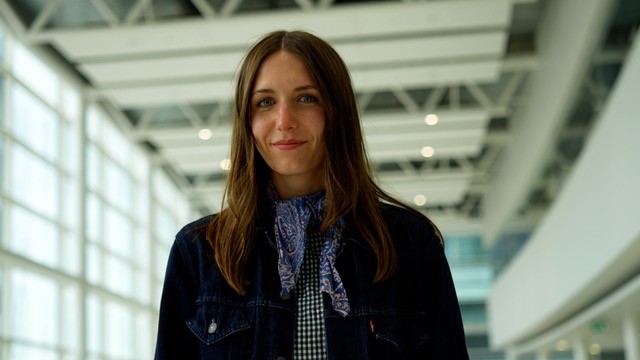
Kirsty is an immersive environment designer for theatre, festivals and live events. With a background in theatre design, her work explores how sound, light and spatial design can shape emotional experience. As an autistic artist, her practice is increasingly focused on developing sensory calming spaces that reduce overwhelm, offer refuge and support meaningful connection.
“I am delighted to be joining Lowry as a Venice Fellow and to have the time to develop my practice there. It means a lot to continue exploring the design of sensory calming environments in a place that champions diverse audiences and new ideas.”
Instagram: @kirstybarlow__design
Gherdai Hassell
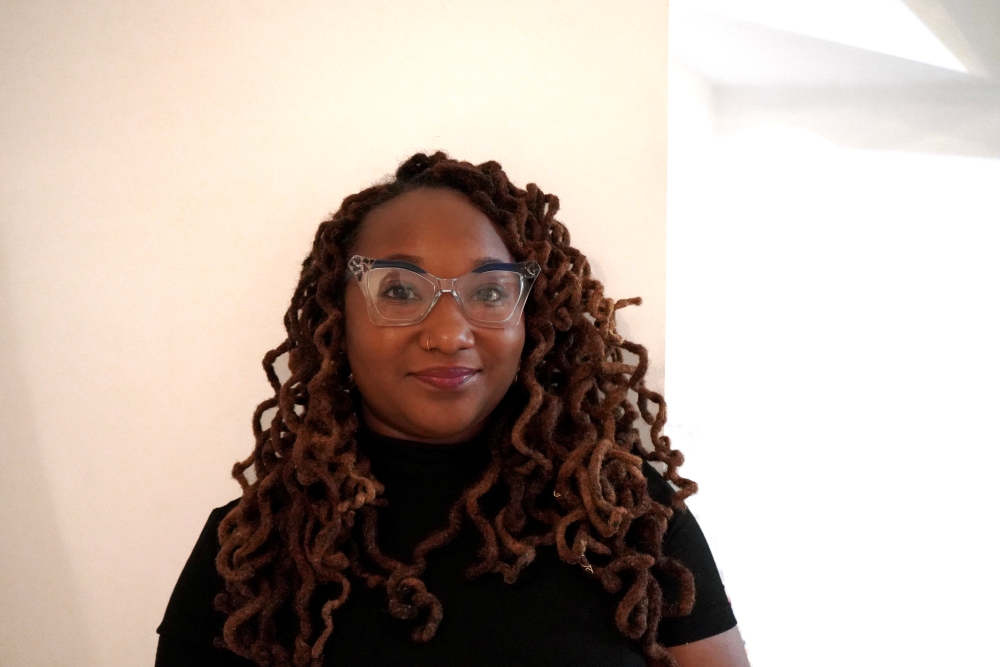
Gherdai is a multidisciplinary contemporary artist, podcast host and independent curator and researcher based in Manchester, UK. Having studied in China. Her work investigates memory and nostalgia to construct and deconstruct identity through collage, painting, textile, fashion and site specific installation. She often uses the onion as metaphor, employing mixed media techniques to thread and weave layers of history and the complexities of Bermudian identity Caribbean heritage, post colonial narratives and identity.
Her awards include the 2025 KLAT International Creative of the Year, 2025 Arts in Medicine Fellow and a 2025 Women in Art Prize recipient. In 2023, She won the Dr. Eva Hodgson Racial Justice Award, and was a Jerwood x HOME resident artist. She was a 2022 Manchester Open Award winner, and in 2021 a Master works Museum’s Charman Prize winner for distinctive style. She is a three time best of Bermuda Award -Visual Art recipient. The 2021 Women’s United Art Prize recipient
Her artwork is a part of public and private collections across the world. Her work has been presented in solo and group exhibitions and biennials in Bermuda, USA, UK , Nigeria, Cuba, Sweden, Switzerland, Mali, Belgium, South Africa and China. Gherdai is a Graduate of the China Academy of Art.
“I'm deeply honored to have been selected as a Venice Biennial Fellow with the British Council and representing the Lowry in Salford. To continue working within the late curator Koyo Kouoh's legacy is a gift. I am excited to embark on this journey to connect, to learn, to listen and to experience how the work will be impacted, inspired and evolve.”
Website: Gherdaihassell.com
Instagram: https://instagram.com/hassell_free
Reflections
VOCAL ABOUT VENICE
By Gherdai Hassell
During my time in Venice, I developed two participatory works alongside my duties at the British Pavilion, Water Writes and What We Carry. Water Writes invited visitors into a drop-in session hosted on the front porch of the British Pavilion. The workshop centered textile swatches dyed using canal water, paired with tuning forks. It was a way of letting people encounter water as something that holds memory and sound, not just as a backdrop to the city. It asked the question, what does water mean to you?
The swatches will be turned into a community quilt. What We Carry was a collaborative workshop with another Fellow rooted in questions of water holding memory women's labour, domestic ritual, and what gets passed down and carried across generations and distances asking the new Fellows to consider what they are carrying with them and what they are taking away from The experience. Both grew out of the research I've been developing in my doctoral project, which looks at plants, textiles, and the exhibition itself as a critical method, using making as a way of thinking through diaspora and inheritance.
Venice is a city defined by water in a way that's impossible to ignore, and being immersed in that daily changed how I thought about the canal water dyeing in the swatches I created for my Water Writes workshop. There's something about working with a material, water, that is simultaneously the city's foundation and its constant threat, that sharpened my thinking about water as memory. It’s something that carries history, erodes it, and holds it all at once. Being surrounded by the scale and ambition of the Biennale also pushed me to think bigger about what a participatory, community facing practice can hold. intimate, raw work can sit comfortably alongside a major international exhibition without losing its meaning.
Lubaina Himid's exploration of what it means to make a home in a place not built to welcome you resonated deeply with the questions I carry in my own practice, around diaspora, belonging, and the Caribbean diasporic experience. Her use of the kanga paintings, treating textile as a language that moves between bodies, histories, and settings, spoke directly to how I think about fabric and dye in my own work, not just as material, but as a carrier of story and coded meaning.
The Pavilion's soundscape deeply resonated with me, moving from something pastoral into something more unsettled, also stayed with me. Even the seagulls outside the Pavilion were mesmerised by it. It is part of what drew me toward incorporating the tuning forks in my Water Writes workshop, using sound as another register for memory.
Being in Venice allowed me to think deeper about presence as practice. And I decided that some days, presence alone is defiance. Whilst other days it was just breath, in, out, the quiet insistence of staying visible without becoming a spectacle.
The gaze was heavy in Venice. To be the preferred subject of a stranger’s photograph (sometimes without permission) especially whilst surrounded by art (where there is a choice to choose what to point a camera at) was quite peculiar to me. Bell Hooks writes in her essay “Being the subject of art” about the difference between perceiving versus being perceived, presence as something you allow rather than something done to you. Hooks is naming the specific vulnerability of stepping from the viewer of art into the subject’s position.
During the Fellowship, I learned to be witnessed rather than watched. However hard, this has required a witnessing of myself first. All the messy parts. The darkest parts, and shadows of who I am. It means a Holding of myself, my discomfort, my emotions, my tongue, my resolve and my dignity. And my right to personhood.
She writes “To recognize is to transgress. Withholding recognition strips us of our power to interrogate, to intervene on, to act. We are afraid of not being seen. We do not know the truth that to be seen and not known is the ultimate abandonment. We refuse to know each other. In pain there is also the possibility of connection. It is easy to dominate that which you see and never know. To want to know is to transgress.” This has helped me to sit within what it means to be perceived, in this body, with this identity and this history. I don’t think I’ve ever been this visible, live in the flesh, and it has been an exercise in presence as patience.
The Fellowship has clarified how much I want my practice to keep working across scale, from the intimacy of a workshop to the ambition of a major international exhibition, rather than choosing one over the other. It also sharpened my sense of what I want to build back home in Manchester. I've come away wanting to root this Venice experience in Manchester, developing new work that ties what I explored with water in Venice to the canals in Manchester and building it out into larger, more permanent body of work rather than letting it end with the fellowship. The work Created in Venice will also build on the work I will be creating during my doctoral research, which traces colonial plant migrations across the Atlantic, textiles and the exhibition as critical method.
I’m thrilled that Lowry offered me an opportunity to experience my practice through the Fellowship. The experience has been invaluable. I have also been selected as a Venice Finissage steward Fellow and will be returning to Venice in November 2026 to close the exhibition. With some of the staff from the museums that the exhibition will be traveling to when it returns to the UK.
2024 Alumni
Amy Townsend-Lowcock
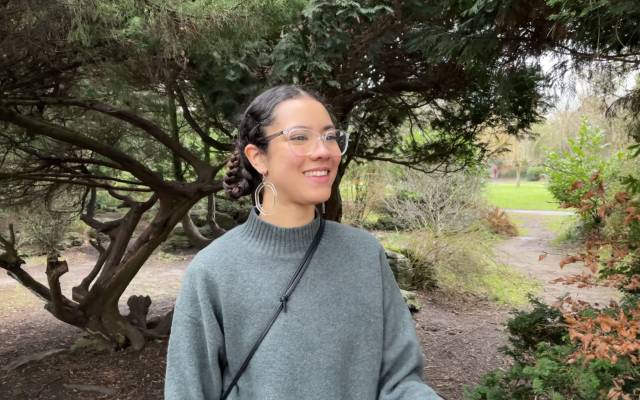
Amy is a multimedia artist and researcher with an interest in memory, identity, and (post)colonial histories. Inspired by documentary techniques, historical archiving processes, and installation art, she creates live performances that invite audiences to re-imagine British identity. Her performance work includes ‘My Fruits’ (HOME Manchester, 2023) and ‘Handle with Care’ (Contact Theatre, 2022).
Isabella So
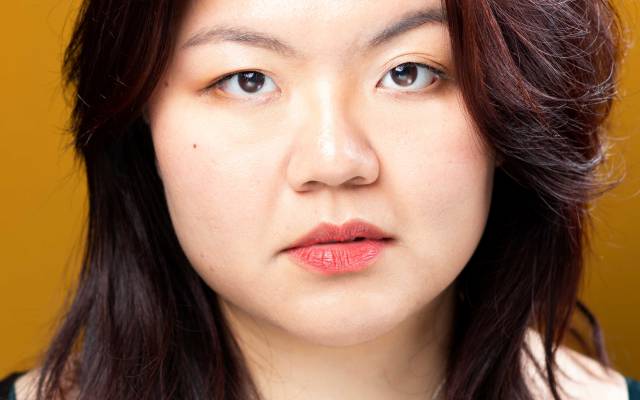
Isabella is a multidisciplinary artist based in Manchester. She draws upon her unique cultural identity as both a Hong Konger and Korean to explore themes of identity, memory, and slice-of-life stories with a comedic twist. Raised on the power of storytelling, Isabella approaches her work in performance, directing, and projection design with a focus on uplifting diverse narratives and engaging audiences through immersive techniques. During her theatre studies at Coventry University, Isabella began experimenting with video projections and devised performance pieces that delved into questions of identity and memory. Since graduating, she has continued to hone her experimental, contemporary approach, fusing elements of comedy, technology, and cultural commentary.